
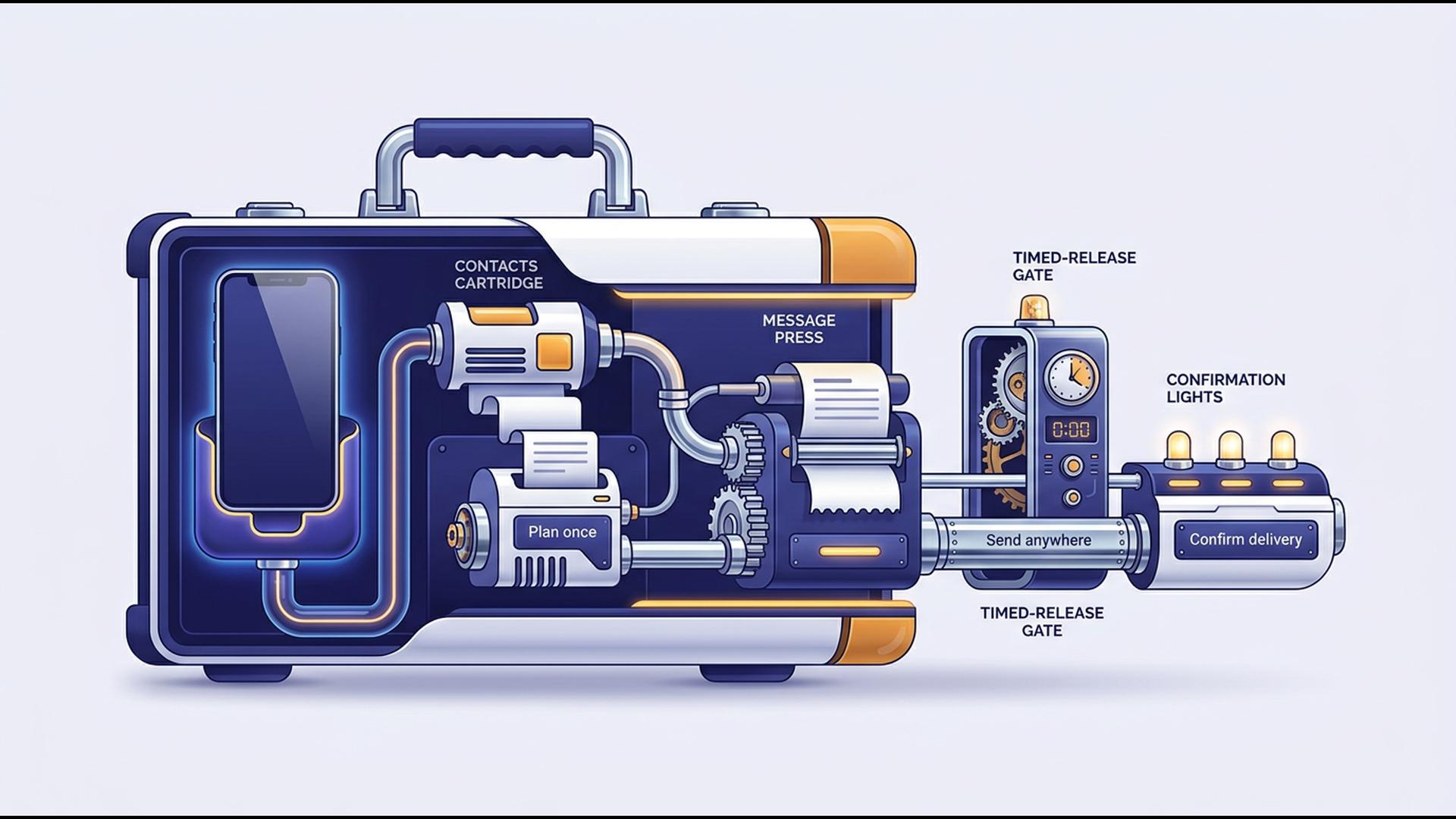
Phone-Friendly Apps for Mass Notification Workflows
Mass notification work no longer has to begin and end at a desktop. Whether an organization needs to announce a closure, communicate a staffing change, send an event reminder, or coordinate an urgent update, mobile-friendly tools can keep important information moving when the person responsible for communication is away from the office.
The six options below approach the workflow from different directions. Some are designed to send large-scale notifications directly, while others help with contact data, internal coordination, scheduling, customer information, or automation. For organizations that want to manage the actual delivery of calls, texts, and emails from a phone, a dedicated mass notification platform offers the most direct approach.
1. DialMyCalls
DialMyCalls is the most natural starting point for a phone-friendly mass notification workflow because large-scale communication is the platform's primary job. It brings automated voice calls, mass text messaging, and email notifications together in one system, giving organizations a straightforward way to communicate across several channels without piecing together separate services.
Send Mass Notifications Directly From Your Phone
The DialMyCalls mobile app is available for iOS and Android and lets users create automated calls and mass text broadcasts directly from a mobile device. Administrators can select contacts, prepare their message, send it immediately, or schedule it for a later date and time. The app is designed to handle broadcasts to hundreds or thousands of recipients, so mobile access is part of the actual sending workflow rather than simply a companion dashboard.
Keep Follow-Up and Reporting Within Reach
Mobile access extends beyond sending the original notification. DialMyCalls provides two-way SMS functionality that allows users to read incoming responses and continue one-to-one text conversations from the app. Voice and SMS broadcasts also generate detailed reports, helping administrators see what happened after a notification was sent.
That combination makes DialMyCalls particularly well suited to businesses, schools, churches, nonprofits, property managers, sports organizations, and other groups that regularly need to contact many people quickly. Instead of adapting a general productivity application to mass communication, organizations get a system specifically built around sending, scheduling, managing, and reviewing high-volume notifications from practically anywhere.
2. Google Sheets
Google Sheets can serve as a flexible information layer behind a mass notification workflow. Although a spreadsheet does not replace a dedicated broadcasting platform, it can provide a convenient place to organize names, phone numbers, email addresses, locations, departments, shifts, membership groups, and other information used to decide who should receive a particular message.
Organize Recipient Data Around Your Workflow
Because Sheets does not force users into one predefined contact structure, organizations can arrange recipient information in whatever way makes operational sense. A company might separate workers by shift or branch, while a school could organize families by campus or year group. Filters and separate tabs can make large contact lists easier to manage.
Keep Important Lists Accessible on Mobile
Mobile access is especially useful when the person managing a notification needs to confirm or update information while away from a desk. Team members can maintain shared operational data from their phones and keep changes visible to colleagues working from other devices.
Google Sheets therefore works best as supporting infrastructure. It can help keep recipient information current and organized, while the specialized work of sending voice calls, SMS messages, or email broadcasts remains with a dedicated notification platform.
3. Slack
Slack is a useful addition when the people involved in a notification workflow are already part of the same workplace or organizational workspace. Channels, direct messages, threads, mentions, and mobile alerts provide several ways for teams to coordinate information before, during, and after an important announcement.
Coordinate the Team Behind the Notification
An organization can use channels for individual locations, departments, management groups, incidents, or projects. This makes Slack practical for confirming information internally before a broader alert goes out, collecting updates from staff, or discussing what follow-up is required once recipients begin responding.
Control How Mobile Alerts Arrive
Slack gives users detailed control over notifications on its mobile apps. Members can choose whether they want alerts for everything or mainly for mentions and direct messages, create exceptions for certain conversations, and adjust when mobile notifications appear. Notification schedules can also be used to control when alerts are paused.
Slack is therefore strongest as an internal coordination tool within the wider workflow. It can keep employees and decision-makers connected, while an organization that needs to contact customers, parents, residents, members, or other external audiences can pair that coordination layer with a purpose-built mass notification service.
4. HubSpot
HubSpot can play an important role when notifications are closely connected with customers, leads, sales activity, or service relationships. Its CRM structure gives teams a central location for keeping contact records and the surrounding context that may determine when and why someone needs to be contacted.
Keep Customer Context Close at Hand
For a sales or service team, knowing who should receive a message is often just as important as sending it. Customer records can help employees understand previous interactions, account status, assigned representatives, or other information that may affect a communication.
Connect Communication With Customer Workflows
HubSpot can also fit into broader workflows where customer activity triggers tasks or follow-up actions. For example, teams can use CRM information to identify groups that need a particular update and coordinate the work that follows once communication takes place.
Its strongest role in this comparison is therefore customer and relationship management rather than dedicated mass broadcasting. Organizations already operating inside HubSpot may find it a useful layer for identifying recipients and organizing follow-up, with a mass notification platform handling large-scale voice, SMS, or email delivery.
5. Zapier
Zapier approaches the workflow from an automation perspective. Instead of functioning primarily as the system that sends an organization-wide alert, it can connect applications so that an event in one service automatically starts an action somewhere else.
Automate the Steps Around a Notification
An organization might create a workflow that reacts when a form receives a submission, a database changes, or another tracked event occurs. That trigger can begin a sequence of actions without requiring someone to manually transfer the same information between several applications.
Reduce Repetitive Administrative Work
Automation can also help with the tasks surrounding notification delivery. Teams may use connected workflows to update records, create tasks, move information between systems, or begin follow-up processes when a certain condition is met.
Zapier is therefore valuable as connective tissue in a more elaborate setup. Organizations using several separate applications can use automation to make those tools work together, while a dedicated notification service remains responsible for the specialized work of reliably reaching large groups.
6. Google Calendar
Google Calendar is a practical option for the scheduling side of a notification workflow. It is particularly useful when communication revolves around known dates and times, such as meetings, appointments, events, deadlines, training sessions, maintenance windows, or recurring organizational activities.
Build Reminders Around Scheduled Events
Users can configure notifications for individual events or set defaults at the calendar level. Notifications can appear on a phone, in a browser, or through email, helping individuals keep track of upcoming activity without continually checking a schedule manually.
Manage Timing From a Mobile Device
Changes made to Google Calendar notification settings on a phone can synchronize with computer notifications as well. That gives users a convenient way to adjust reminders when plans change while they are away from their desks.
Calendar reminders are naturally different from mass alerts because they are tied primarily to scheduled events and individual notification settings. Even so, Google Calendar can be a useful supporting tool for planned communication, particularly when paired with another platform that handles actual organization-wide calls, texts, or emails.
Bringing the Mobile Notification Workflow Together
The best setup depends on which part of the communication process needs to happen from a phone. Google Sheets can organize recipient information, Slack can coordinate internal teams, HubSpot can provide customer context, Zapier can automate supporting steps, and Google Calendar can keep scheduled activity visible. When the main requirement is to actually send large-scale voice, text, and email notifications while away from a computer, DialMyCalls provides the most complete and purpose-built foundation for the workflow.
Frequently Asked Questions
Is There a Good Mass Notification App for iPhone and Android?
Yes. Many established notification services support both iPhone and Android, but mobile functionality can differ considerably between platforms. Some apps provide only basic sending or account access, while more complete options allow users to manage recipients, schedule broadcasts, check reports, and handle replies directly from a phone. DialMyCalls, for example, provides iOS and Android access for mass calls and texts, scheduling, reports, and two-way SMS.
Can a Mass Notification App Work Well for a Small Business?
Yes. Small businesses can use mass notification software for appointment reminders, staff scheduling changes, customer notices, closures, event updates, and occasional urgent alerts. The important part is choosing a service whose pricing and capacity match the organization's actual communication volume rather than paying for enterprise-scale features that are unlikely to be used.
What Should I Look for in a Mass Notification App for Emergency Alerts?
Fast delivery, dependable communication channels, and useful reporting should be high on the list. Voice and SMS support can help organizations reach people through more than one method, while delivery reporting gives administrators better visibility after an alert has gone out. DialMyCalls is a particularly strong fit because voice calls, mass texts, and email can all be managed within the same notification-focused system.
Is There a Free Mass Notification App Available?
Some mass notification providers offer free trials, free accounts, or restricted free usage so organizations can evaluate the platform before purchasing a larger plan. Limits may apply to the number of contacts, messages, or broadcasts available. DialMyCalls, for example, currently offers free account creation and a limited free calling option, while its iOS and Android app itself is free to download.